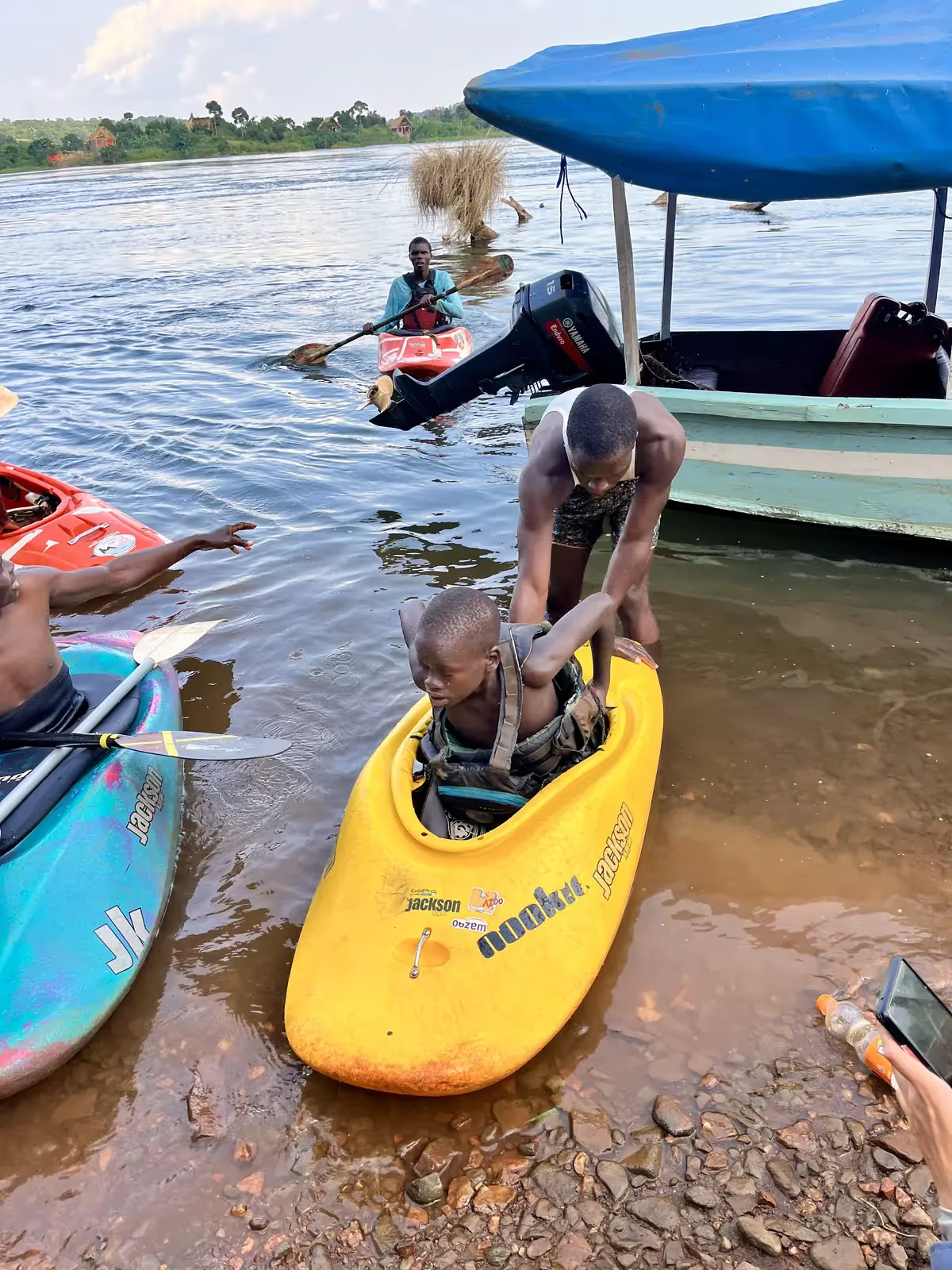
On the dusty banks of the Nile in Bujagali, Witin and Peter are building a legacy out of worn-out gear and shared dreams.
The White Nile is more than a workplace for them; it is a sanctuary. They spend their free time teaching kayaking to local girls and children with disabilities, proving that heritage isn't about the freshness of your equipment—it's about the depth of your soul.
The Soul of Bujagali
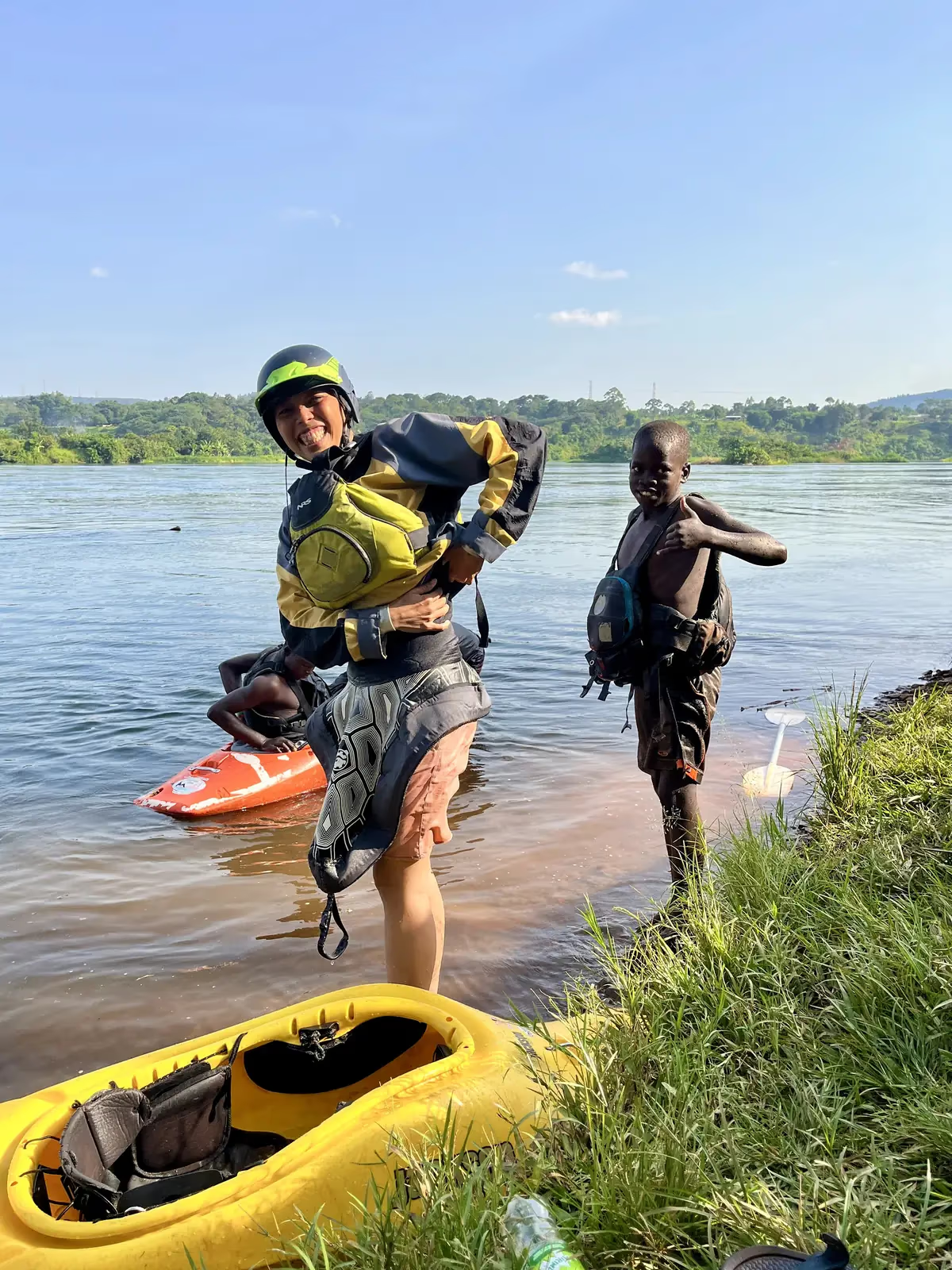
The roar of the Nile is the heartbeat of Bujagali. For Witin and Peter, the river is where they found their purpose. I watched as they moved with a grace that only years of battling white water can forge, but it was their work on the shore that truly caught my attention.
"We are here today because
foreign kayakers helped us years ago."
Worn Helmets, New Dreams
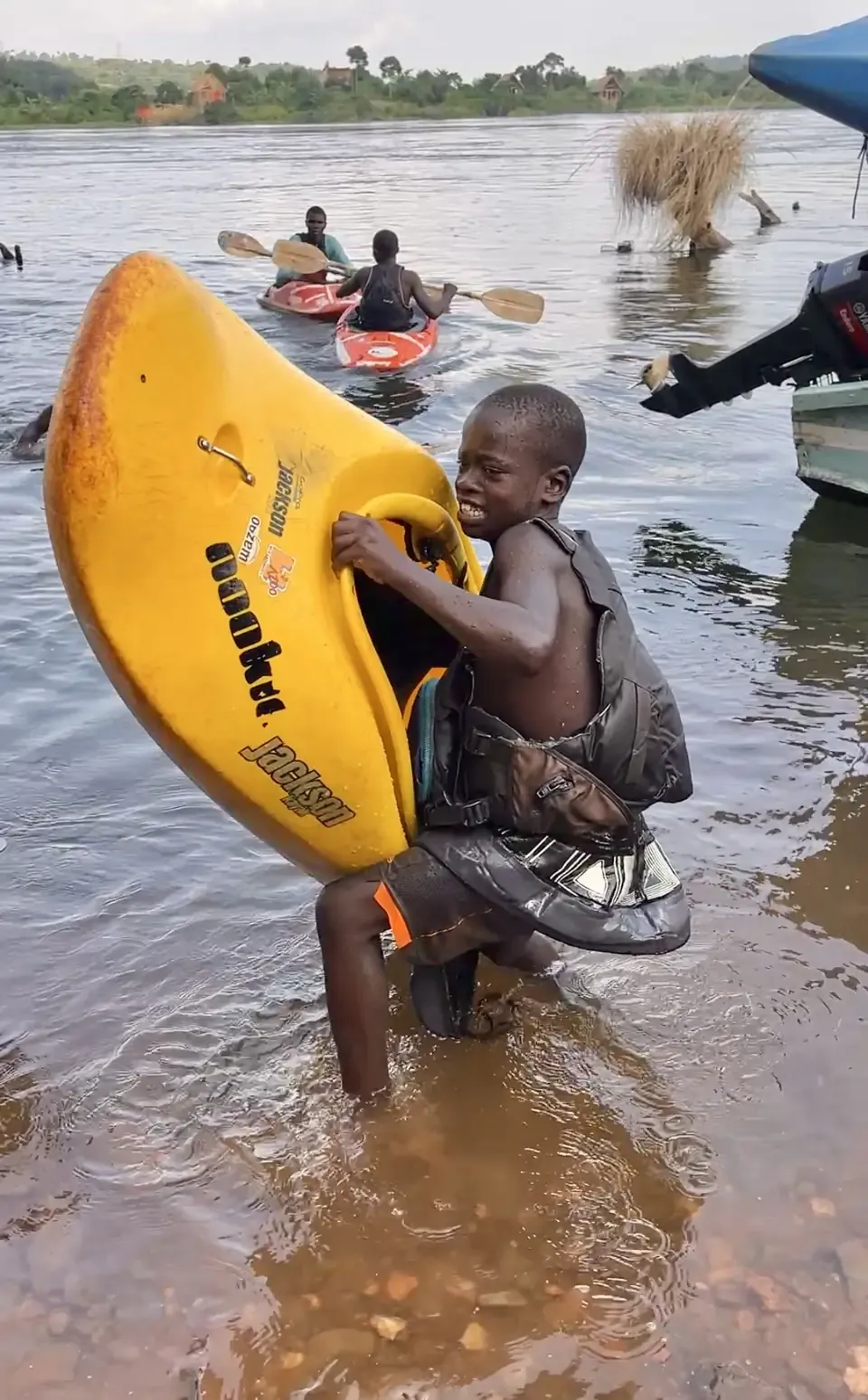
The air in Bujagali is a thick mix of afternoon heat, red dust, and the lingering scent of old neoprene. I watched as children lined up on the shore, patiently waiting for their turn to wear what they call the "everything gear."
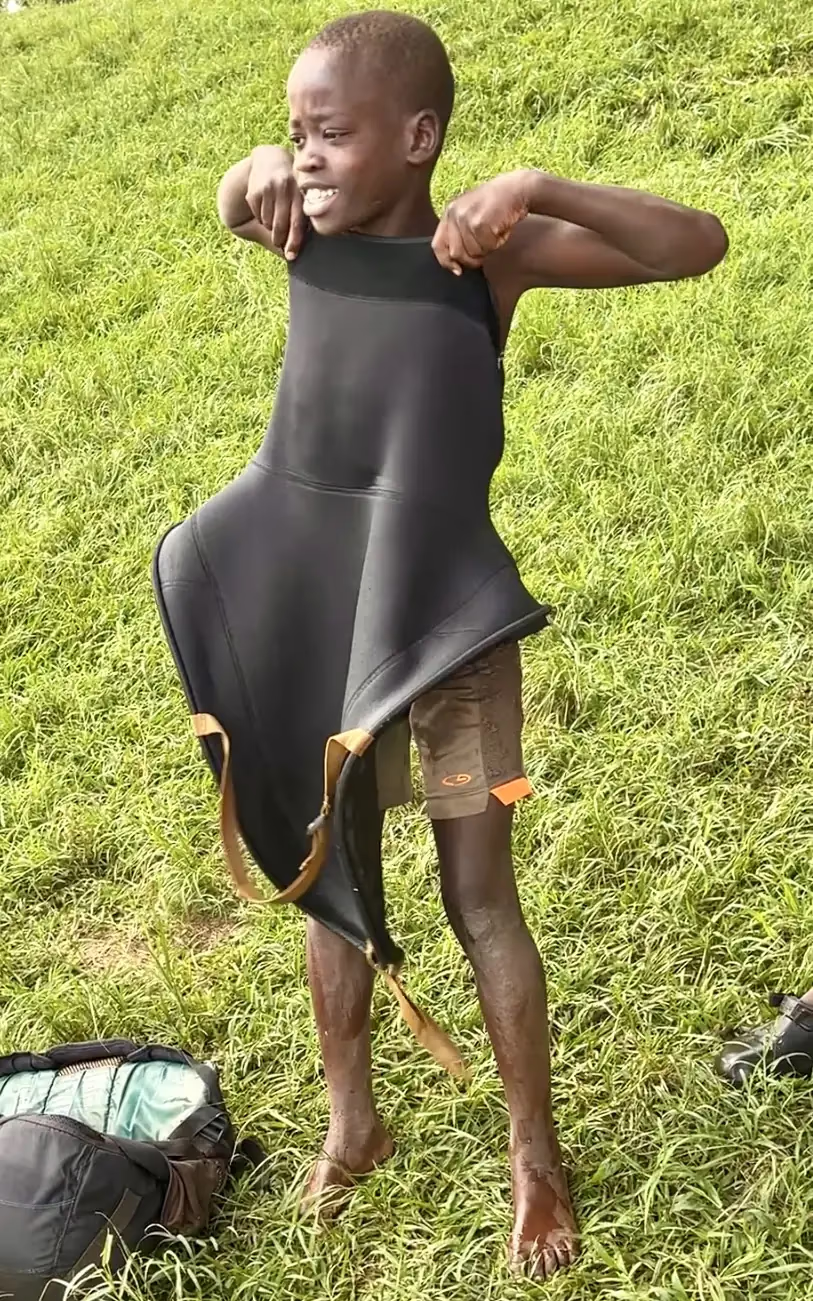
There is no "my gear" here; everyone shares the same worn helmets. It doesn't matter if the helmet is two sizes too big; the moment they grip the paddle, they are champions.
For many, this is the only time they feel the weight of their own potential instead of the weight of their struggles.
Defying Tradition
Uganda’s traditional culture often keeps girls bound to the hearth and the fields. Kayaking was long considered "men's work." But Witin refused to accept this silencing of half the village's potential. Every girl on the water represents a ripple of change in a rigid social tide.
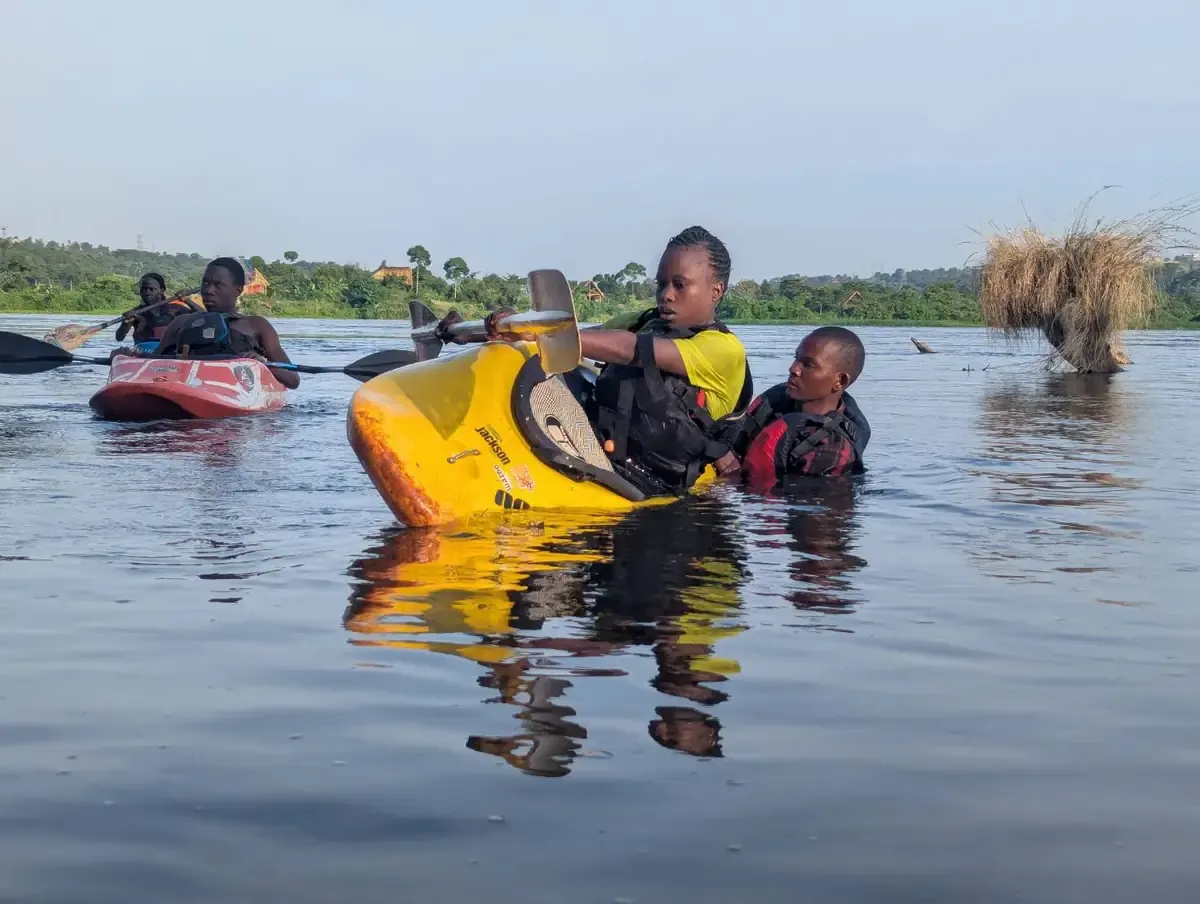
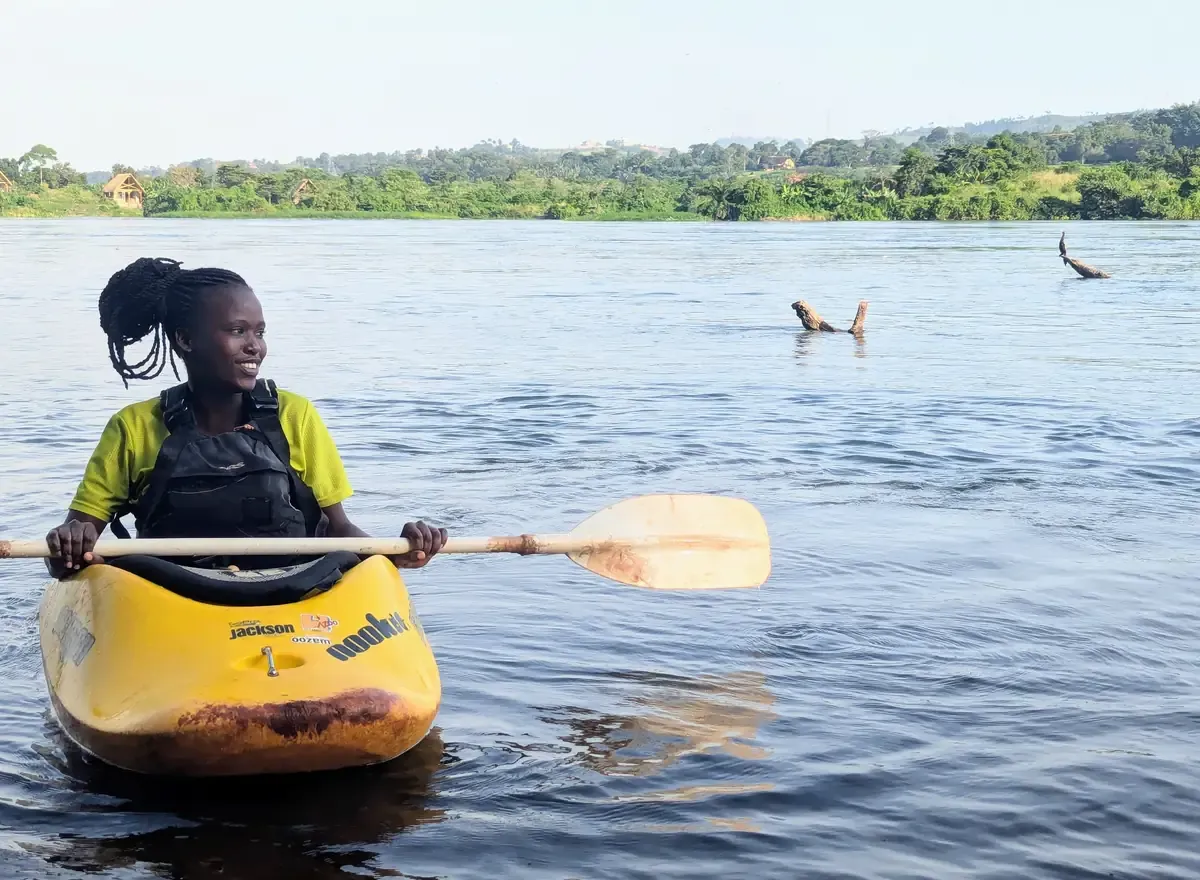
No Soul Left Behind
"In the water, the limitations of the land dissolve."
While Witin is the fire in the rapids, Peter is the calm depth of the river. He often noticed children on the banks who couldn't run and play like the others. Peter never let them stay lonely. He gently lifted them and placed them into a kayak, giving them a freedom only the Nile can provide.
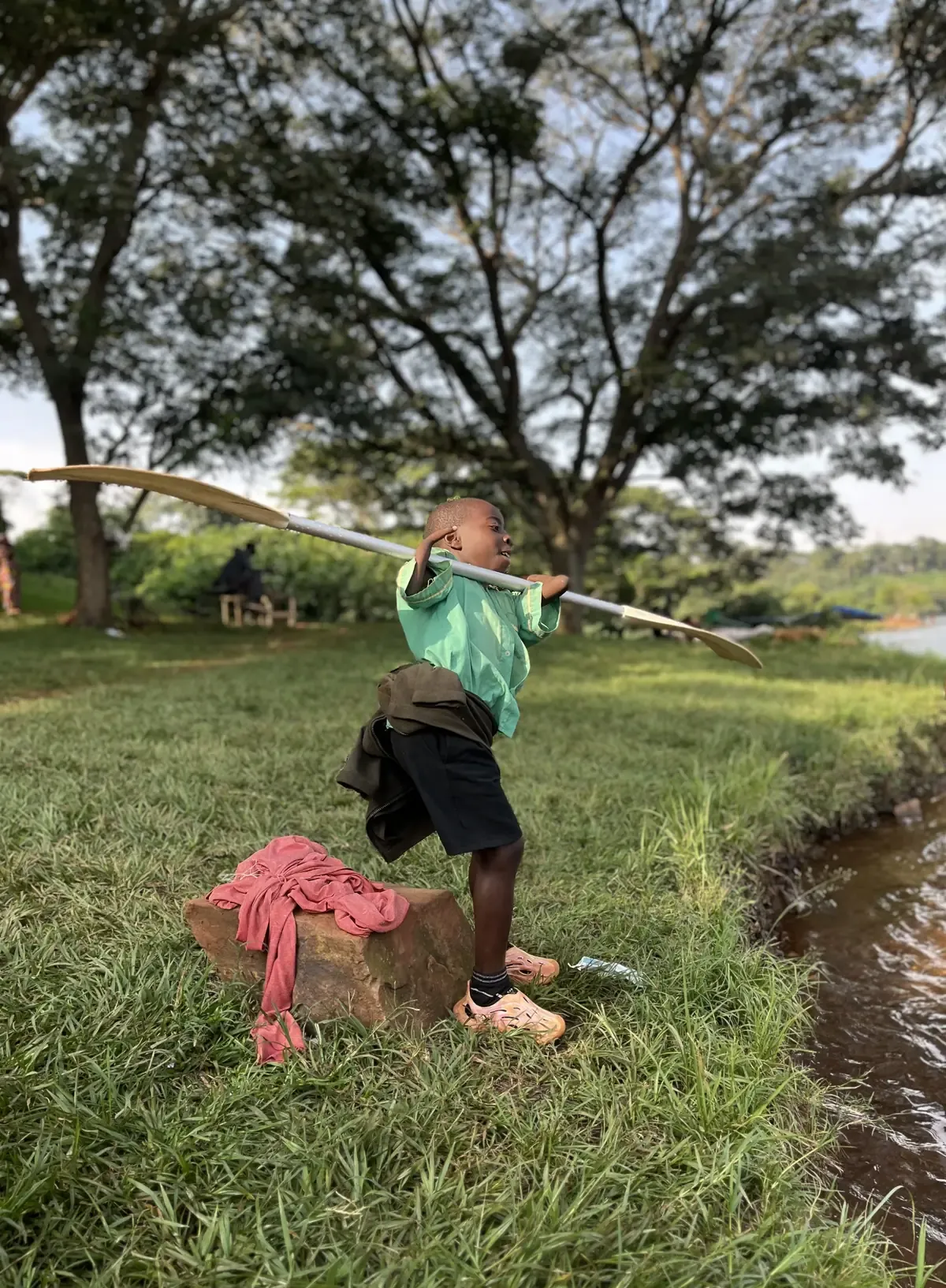
This is what Paddles on the Nile stands for. We aren't just here to take tourists down the river. We are here to ensure that the river continues to nurture the people who call its banks home.