Frequently Asked Questions
Everything you need to know about rafting the White Nile
Top Questions
Do you provide accommodation?
Yes, we do. We have our own Bujagali Basecamp accommodation. This is a local gem truly integrated into the village, and its location is unbeatable—sitting right on the daily route to the river, saving you valuable travel time.
To ensure the security that paddlers care about most, the complex features high perimeter walls and professional security 24/7. We offer comfortable ensuite rooms and a spacious private courtyard where you can wash and store your gear with complete peace of mind.
Additionally, we have a dedicated campfire and BBQ area, letting you relax under the stars after a full day of whitewater challenges.
How should I pay?
We try our best to make the payment process as simple as possible. Most people choose to pay in cash to avoid bank fees.
Currencies we accept:
- Ugandan Shillings (UGX)
- US Dollars (Unmarked and issues from 2009 onwards)
- British Pounds (GBP)
- Euros
What do I need to bring?
To join our introduction to whitewater day trips and other activities, you only need to bring yourself along with:
- Clothes you don't mind getting wet (shorts, T-shirt, swimsuit)
- Any medication you might need (e.g., asthma inhaler, EpiPen). All guides carry a first aid kit on the water, and your medication can be kept inside it to stay dry and easily accessible.
- Dry clothes to change into after the activity.
The following items will make your day more comfortable: Sunscreen – High SPF and in generous amounts; this river is famous for easily washing off "waterproof" sunscreens.
Which season should I come to the Nile?
Water Levels:
The water levels here are very stable year-round because there is a dam built just after the Nile flows out of Lake Victoria. According to an agreement between the countries the Nile flows through, Lake Victoria must release a minimum flow of water to allow the Nile to flow into Egypt. This minimum flow creates excellent kayaking conditions. Generally, we have lower water levels in the morning and higher levels in the afternoon.
Seasons:
In recent years, the rainy seasons seem to have become a bit more unpredictable, but generally, the rainy season occurs twice a year: once from April to May, and another from October to December. Having said that, the sun still shines brightly during the rainy season, and it also still rains during the dry season! But one thing is for sure here: the weather is always warm!
Are there crocodiles or hippos?
In the section of the Nile where we kayak (from Jinja to Busana), there are no hippos, and 99% of the crocodiles have been wiped out. After more than 20 years of rafting and kayaking activities, and hundreds of thousands of customers having fun on the Nile, there has never been a crocodile-related incident here.
If you want to see these animals on the Nile, you will need to drive 8 hours to Murchison Falls National Park.
Rafting
Do you provide transport between Jinja and the rafting camp?
Yes. We provide free transport between our rafting base/camp and Jinja town for all participants. Please note that we do not offer direct shuttles from Kampala or Entebbe; however, we are happy to assist you in arranging a trusted private driver or explaining how to reach us using local transport if you are coming from outside Jinja.
Will I get wet in the Grade 3 and Grade 5 rapids?
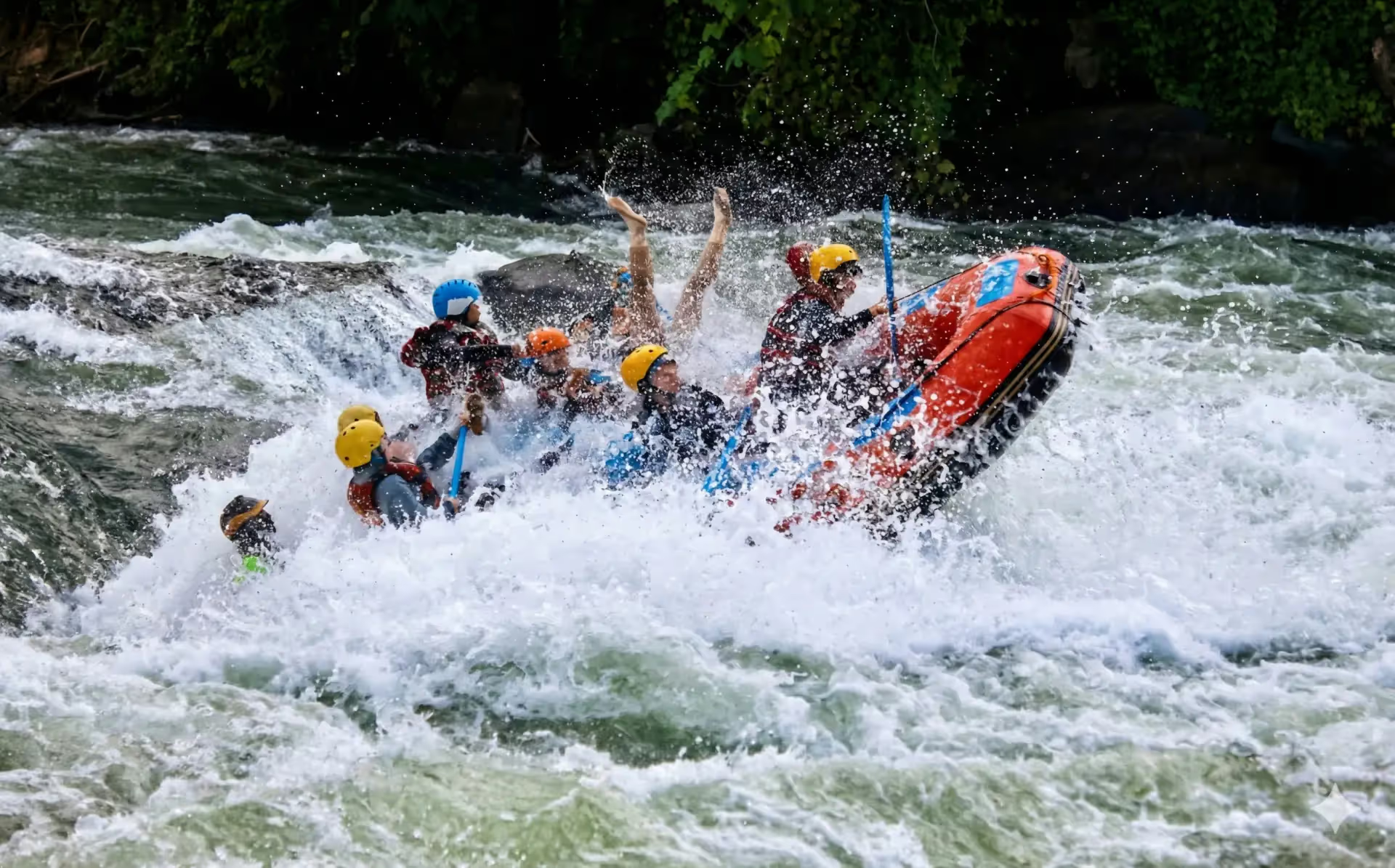
Count on it! Getting drenched from head to toe is part of the legendary Nile experience on Grade 3 and 5 runs. If you're looking for something a bit drier, our family float trips offer refreshing splashes without the full soak.
What safety measures are in place?
We implement elite safety protocols. Every guest is outfitted with professional, Grade 5-rated helmets and life jackets. Every trip is supported by expert safety kayakers and an oar boat equipped with complete medical kits. Our guides are all first-aid certified and hold decades of combined river navigation experience.
Are you open on Christmas Day?
We never close! We operate 365 days a year—including Christmas Day (December 25th) and all public holidays. The river never stops, and neither do we.
What is the minimum age for rafting?
Adventure is for all ages! We are proud to be family-friendly: children as young as 3 years old can join our Grade 3 trips, while our adrenaline-pumping Grade 5 expeditions are open to anyone 6 years and older.
What should I wear for rafting?
Stick to light, quick-drying gear like board shorts and a long-sleeve rash guard or T-shirt for sun protection. For shoes, bring sandals or flip-flops that can be secured to your feet and that you don't mind getting wet.
Can I go rafting if I can't swim?
Yes, you certainly can. Our specialized life jackets are engineered for major whitewater and will keep you floating high on the surface. Before we launch, we’ll teach you exactly what to do if you end up in the water. Just let your guide know your comfort level, and we’ll provide extra support.
What should I leave at my accommodation?
It is best to leave jewelry, watches, rings, and expensive electronics behind. The Nile is powerful—anything loose or precious is much safer stored at your hotel than in a Class 5 rapid!
Is the water cold?
Not at all. The White Nile is famously warm, staying at a consistent 26°C (79°F) year-round. It’s the perfect temperature for spending the whole day in the water!
How do the dams affect rafting?
Absolutely not. Even with the new dams, we continue to run world-class whitewater trips. We’ve simply shifted our focus to the best remaining rapids to ensure your 19km journey remains as wild and exciting as ever.
Do we still go if it rains?
Definitely! You’re going to get soaked on the rapids anyway, so a little rain only adds to the adventure. Some of our best river memories have been made during Nile rainstorms.
Do you cater for vegetarians and special diets?
Yes, we do. We offer vegetarian and vegan meals and can cater to most food allergies. Just let us know your requirements when booking so we can coordinate our local kitchen for you.
Can I bring my camera or GoPro?
For full-day trips, we suggest leaving cameras at home. Space is limited, and your focus should be on the water. We provide helmets with GoPro mounts, and you are welcome to use them at your own risk. Note: We provide a professional media package with most trips!
Do you operate on weekdays?
Yes, we are fully operational seven days a week, year-round. Whether it's a Monday or a Saturday, the adventure is ready for you.
Can you handle large groups?
Definitely. For groups of 8 persons or more, we can customize transport, meal times, and trip length to suit your specific group needs.
What personal items should I bring?
Bring your adventurous spirit, sunblock, a change of clothes for after the trip, and a reusable water bottle. If you have personal medication (like an asthma pump), please bring it—our guides will keep it safe and dry for you.
What about Bilharzia/Schistosomiasis?
Infection risk is negligible in the high-oxygen, fast-moving sections where we raft. Bilharzia is primarily found in stagnant waters. For total peace of mind, it is treatable with a single dose of Praziquantel, which is easily available in Uganda.
What is the etiquette for tipping?
Tipping is never mandatory, but if you feel our crew went above and beyond to make your day safe and fun, tips are highly appreciated by the Bujagali locals.
How far in advance should I book?
We accept bookings as late as the day before. However, a week's notice ensures we have space for your group. For last-minute inquiries (less than 48 hours), please reach out via WhatsApp for the fastest reply.
Kayaking
Which kayak is best for me?
Gentle, Calm & Relaxing
Our "Source of the Nile Tour," "Bujagali Lake Tour," and "Freedom Rentals" are designed for you. Calm waters, sunshine, bird watching, and perhaps a few drinks—these options are suited for those who want to spend a relaxing time on the river.
Whitewater Action
The Nile has some of the best whitewater in the world, making it one of the best environments in the world to learn kayaking. Those joining our beginner courses usually have absolutely no prior kayaking experience; they are just eager for adventure, want to learn new skills, and want to see Uganda in a completely different way.
What should I wear?
Wearing shorts, a T-shirt, and a swimsuit on the river is absolutely fine. We will provide all the necessary safety equipment for your activity. If you sunburn easily, we highly recommend wearing a long-sleeved shirt to cover your arms. We tend to not wear shoes when kayaking, or opt for thin neoprene boots, but if you want to wear something for the walk to and from the river, flip-flops or sneakers are a perfect choice.
Do I have to book in advance?
Yes, for all our whitewater activities and the Source of the Nile Tour, booking is required. To avoid disappointment, we recommend booking at least 24 hours in advance. You can contact us via email, message us on WhatsApp, or if you are already in Uganda, please call +256 772 880 322 to make a booking.
Travel & Visas
Can I get a Ugandan tourist visa at the border?
e-Visa (Online):
The most efficient method is to apply online through the official Uganda visa website. E-visas are typically processed within 2-3 working days.
Health & Medical
Do I need a yellow fever vaccination card to go to Uganda?
Yes; as of 2016, travelers must present a yellow fever vaccination certificate upon arriving in Entebbe. The World Health Organization announced that starting from July 11, 2016, existing and new yellow fever vaccination certificates are valid for life.
Malaria in Uganda
Malaria is prevalent in Sub-Saharan Africa. For visitors traveling to Uganda, we recommend you take all necessary precautions, such as taking anti-malarial medication, wearing long pants and long sleeves in the evenings, and sleeping under a mosquito net at night. The most common malaria prevention medications in Uganda are Doxycycline and Malarone.
Will I get bilharzia/schistosomiasis in the Nile?
It is widely known that the Nile carries bilharzia pathogens, and there are documented cases of infections from the river. Bilharzia is most prevalent in still and stagnant water. We spend most of our time in fast-flowing rapids, or on sections of the river where the water level fluctuates wildly every day, so these areas are essentially free of this parasite.
Can I drink the tap water?
We do not recommend drinking tap water. During your time kayaking with us, we will provide bottled water. For general travel around Uganda, many villages have boreholes with pumps available to draw drinking water, and bottled water is very easily purchased in small shops and supermarkets.
Money & Payments
Are there ATMs in Jinja?
There are many ATMs inside Jinja city, and we have found the most reliable ones at the following locations: Absa Bank, Stanbic Bank, I&M Bank, DTB Bank, and The Stanbic ATM located in Njeru.
Please note that there are daily withdrawal limits (depending on your bank), and you will be charged a processing fee for every withdrawal. There are no ATMs in Bujagali.
Uganda and US Dollars
If you visit Uganda and choose to bring US Dollars, please bring notes issued from 2009 onwards. Most banks and currency exchange bureaus here do not accept US Dollars issued before 2009. To avoid having unusable US Dollars on hand, please make absolutely sure that all the US Dollars you bring are the 2009 version or newer.
Please note – across the country, notes with denominations lower than $50 will get a poorer exchange rate. Businesses, banks, and currency exchange bureaus frequently reject US Dollars that are marked, torn, or old. If you are traveling from the UK or Europe, consider bringing your GBP and Euros, as they are widely accepted.
Where can I exchange for Ugandan Shillings?
The Ugandan Shilling is a restricted currency and can only be obtained within the East Africa region. You will not be able to get Ugandan Shillings outside of this region.
Alternatively, there are plenty of ATMs available upon arrival in Entebbe and in all major towns.
Jinja Town
Which restaurants do you recommend?
We have been coming to Jinja for the past 10 years, and below are our favorite restaurants. Simply ask any boda (motorcycle taxi) driver for directions, and you can easily find all of these places.
- Bacchus @ 3Wilson: An excellent menu offering family favorites and delicious specials.
- Moti Mahal: Jinja has several good Indian restaurants, but Moti Mahal is our favorite, and it's probably the restaurant with the best CP value in town.
- The Deli: Main Street near the post office. Must-order: Coffee! And their smoothies!
- The Hangout: A very cool spot, featuring multiple restaurants clustered in a group of container houses.
- Zabuli: Run by a family from the US, offering classic American food.
- The Source Café: One of the oldest establishments in Jinja, guaranteeing a taste of warm hospitality.
- New Rendezvous: Although Uganda isn't renowned for its cuisine, among the Ugandan restaurants in Jinja, New Rendezvous is our favorite. Exceptionally high CP value.
Transport & Logistics
How do I get to you from Entebbe airport?
For passengers flying in, we can arrange for a driver we trust to pick you and your luggage up from Entebbe (EBB) International Airport. This is cheaper and safer than hailing a taxi at the airport. For more details and rates, please check our professional shuttle service page. Current rates: Entebbe – Jinja / Bujagali – $80-$100 USD.
Getting to Bujagali via Public Transport
We strongly recommend that you charter a private car, as this makes better use of your time and is more convenient. If you want to come via public transport, head to the Amber Court roundabout in Jinja. From there, you'll need to take a boda (motorcycle taxi); all the drivers know where it is. For a complete breakdown of navigating local small buses, see our Kampala to Jinja Matatu Guide.
Independent Kayakers
How long should I stay on the Nile?
We recommend planning a trip to Uganda for at least two weeks, though people are often still surprised by how fast time flies when it's over. Two weeks is enough time for you to experience everything on the river once, and perhaps squeeze in a trip to Murchison or Sipi Falls.
How do I handle meals if I stay in Bujagali village?
In Bujagali, you can truly taste 100% authentic local flavors! There are small diners opened by locals in the village, where a filling, authentic meal only costs about 4,000 UGX. You absolutely cannot miss the classic street national food, "Chapati Rolex" (a Ugandan specialty omelet wrap).
How do I commute to and from the river?
Commuting to and from the river is a daily routine on the Nile. The local transport system is highly efficient; you simply need to coordinate your pick-up and drop-off points with the drivers directly.
Our Exclusive Highlight: Live by the River! We operate our own Bujagali Basecamp right in the heart of the village. Staying at our site means you can walk straight to the main water put-ins, skipping the hassle of hauling gear. Our property also features secure kayak storage and hot showers, making it the perfect hub for paddlers.
Do you rent kayaks/equipment?
Yes, we do. We have a variety of kayaks, paddles, and soft equipment available for rent. We only rent kayaks to people we have taught before, or whose skills we have seen on the river. This is for your safety, and to ensure our equipment can be returned in good condition.